
Fabrizio Della Seta, Università di Pavia
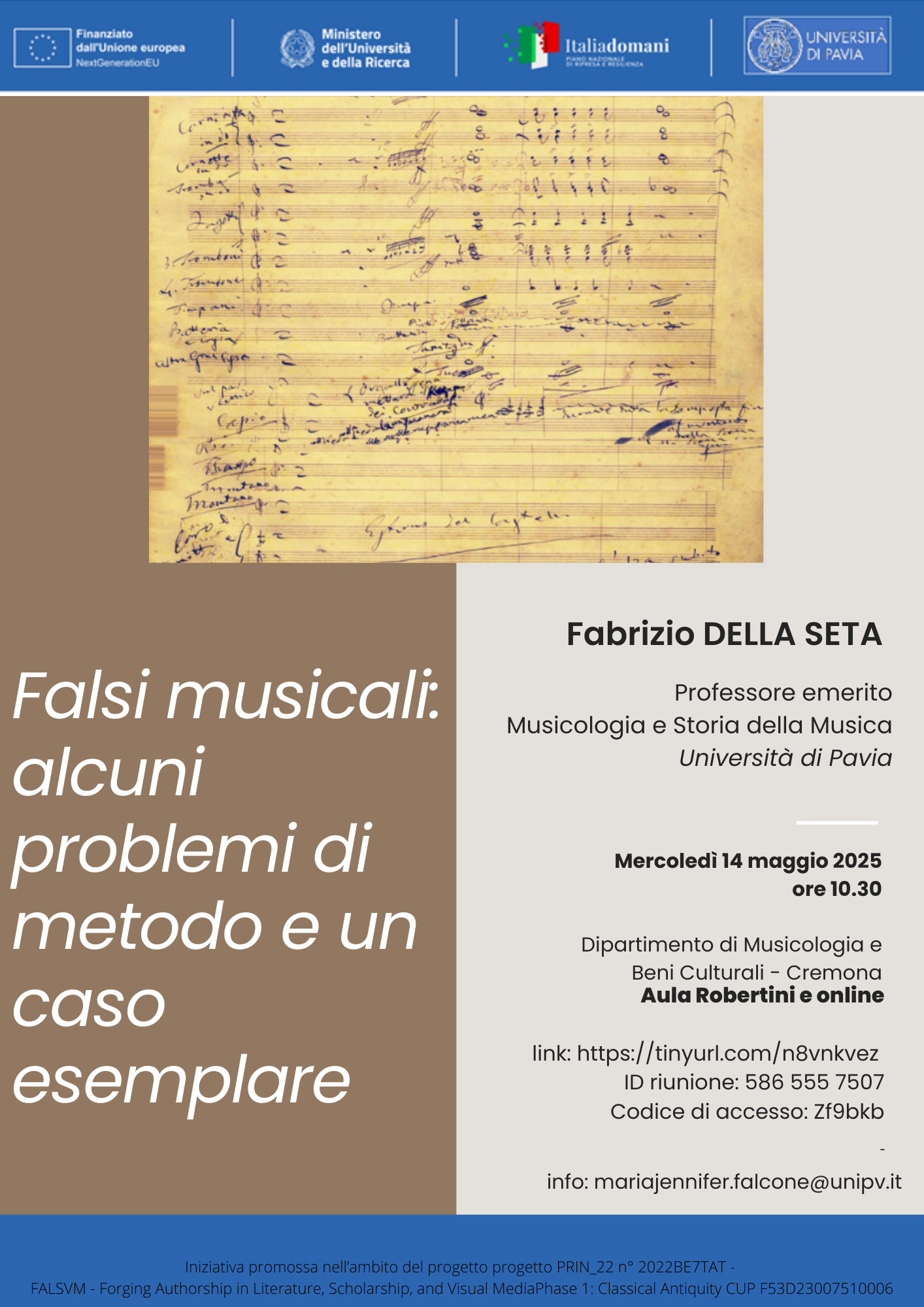
Il concetto di falso in musica è problematico per vari motivi: 1) implica un concetto forte di autorialità che nella tradizione musicale si è affermato lentamente e che solo nel XIX secolo, col culto romantico della personalità, è stato pienamente riconosciuto; 2) la trasmissione scritta della musica è affidata a testi costituzionalmente più instabili di quelli che tramettono testi letterari. Per i secoli che vanno dal tardo medioevo al XVIII secolo, più che di “falsi” si può parlare di “false attribuzioni”, perlopiù non intenzionali. Nell’Ottocento e Novecento sono invece numerosi i casi di opere musicali, trattati e lettere di musicisti attribuiti a grandi musicisti del passato, ma in realtà creati o modificati a posteriori, spesso per motivi commerciali ma anche perché funzionali alla creazione dell’immagine idea del musicista stesso o della “scuola” alla quale apparteneva. Dopo una rapida rassegna di alcuni casi celebri, la lezione illustrerà in dettaglio un caso esemplare: un preteso Preludio all’Otello di Giuseppe Verdi (1887), pubblicato nel 2003 e diffuso in una prestigiosa registrazione discografica.
The concept of forgery in music is problematic for several reasons: 1) It implies a strong notion of authorship, which developed slowly in the musical tradition and was only fully recognized in the 19th century with the Romantic cult of personality. 2) The written transmission of music relies on texts that are constitutionally more unstable than those conveying literary works. From the late Middle Ages to the 18th century, it is more appropriate to speak of “false attributions,” mostly unintentional, rather than outright forgeries. In contrast, the 19th and 20th centuries saw numerous cases of musical works, treatises, and musicians’ letters attributed to great composers of the past but actually created or modified later. These were often motivated by commercial interests or aimed at shaping the idealized image of the musician or the “school” to which they belonged. After a brief overview of some notable cases, the lecture will delve into a detailed examination of an exemplary case: a purported Prelude to Otello by Giuseppe Verdi (1887), published in 2003 and disseminated through a prestigious recording.
The seminar will take place on Wednesday, 14 May at 10:30 AM in the Robertini Room of the Department of Musicology and Cultural Heritage. It is the fifth in a series of thematic lectures on the topic of forgery, organised as part of the national PRIN2022 project FALSVM (Forging Authorship in Literature, Scholarship, and Visual Media – Phase 1: Classical Antiquity; CUP F53D23007510006), coordinated in Cremona by Prof. Maria Jennifer Falcone, together with Prof. Elisa Romano (Pavia) and Prof. Elena Merli (University of Milan).
It will also be possible to attend the event remotely, via the following link: https://unipv-it.zoom.us/j/5865557507?pwd=WmN0QjFVN3FodnlXekptNFlxaXJWZz09 (ID riunione: 586 555 7507; Codice d’accesso: Zf9bkb).
Per informazioni: mariajennifer.falcone@unipv.it.